What not to say…
If you're worried you may inadvertently hurt someone you love struggling to build their family, swipe to read what to avoid and, more importantly, what to say instead
Fertility Journey | Support System | Village
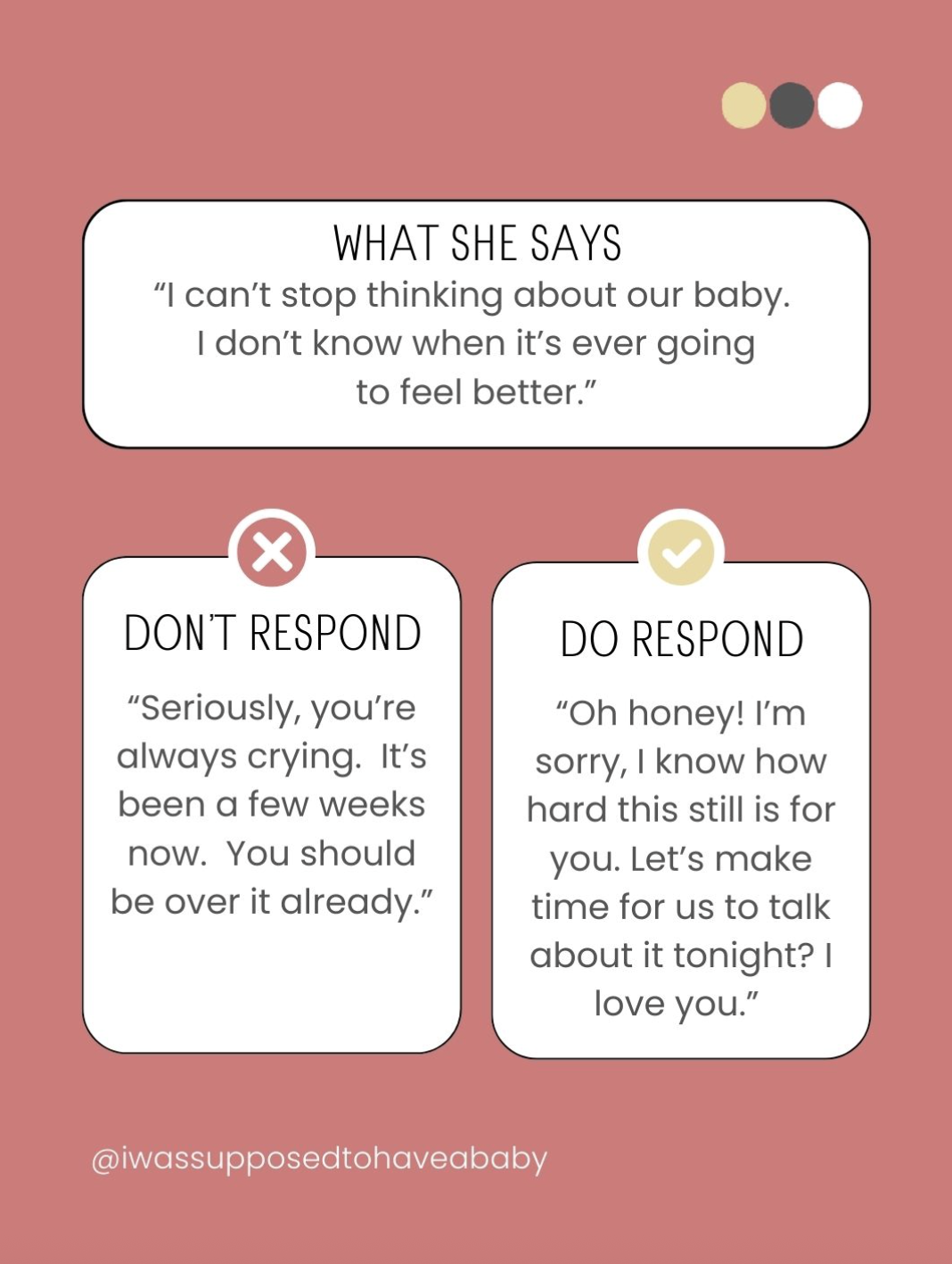
Understanding how to respond
Just because there are two people in a relationship and they go through exactly the same thing, it doesn’t mean that they will feel the same way about it, or grieve as long.
Typically, women grieve longer and harder than men or their partners, who do not carry the pregnancy, because it’s an event that’s happening outside of their body. They feel sad, and they grieve, but they don’t experience the physical or hormonal changes of a pregnancy or a loss. They’re one step removed. This can lead to frustration and discontent from the side that seems to be “carrying” all of the pain, and from the other side, who is often ready to move through the pain.
The disconnect is compounded by society's insistence on a time limit for grief. There’s an unwritten rule that states the shorter the pregnancy, the shorter the amount of time that you’re “allowed” to grieve. And for some, this is true; they grieve a stillbirth for a longer period of time than a chemical pregnancy.
The problem is that this doesn’t account for so many other factors.
-Maybe that chemical pregnancy was after 5 years of IVF with the only good embryo.
-Maybe everyone else is also pregnant now, and that 6-week loss is always on her mind as she compares herself with her friends.
-Maybe she was the first in the family to get married and then pregnant, but having a stillbirth means that another sibling will get the honor of having the first grandchild.
There are so many things we don’t know.
What we do know is that grief should have no limitations and that each person needs to be treated with kindness and sensitivity after a loss.
Pregnancy & Infant Loss | Grief | Marriage | Relationships | Fertility Journey
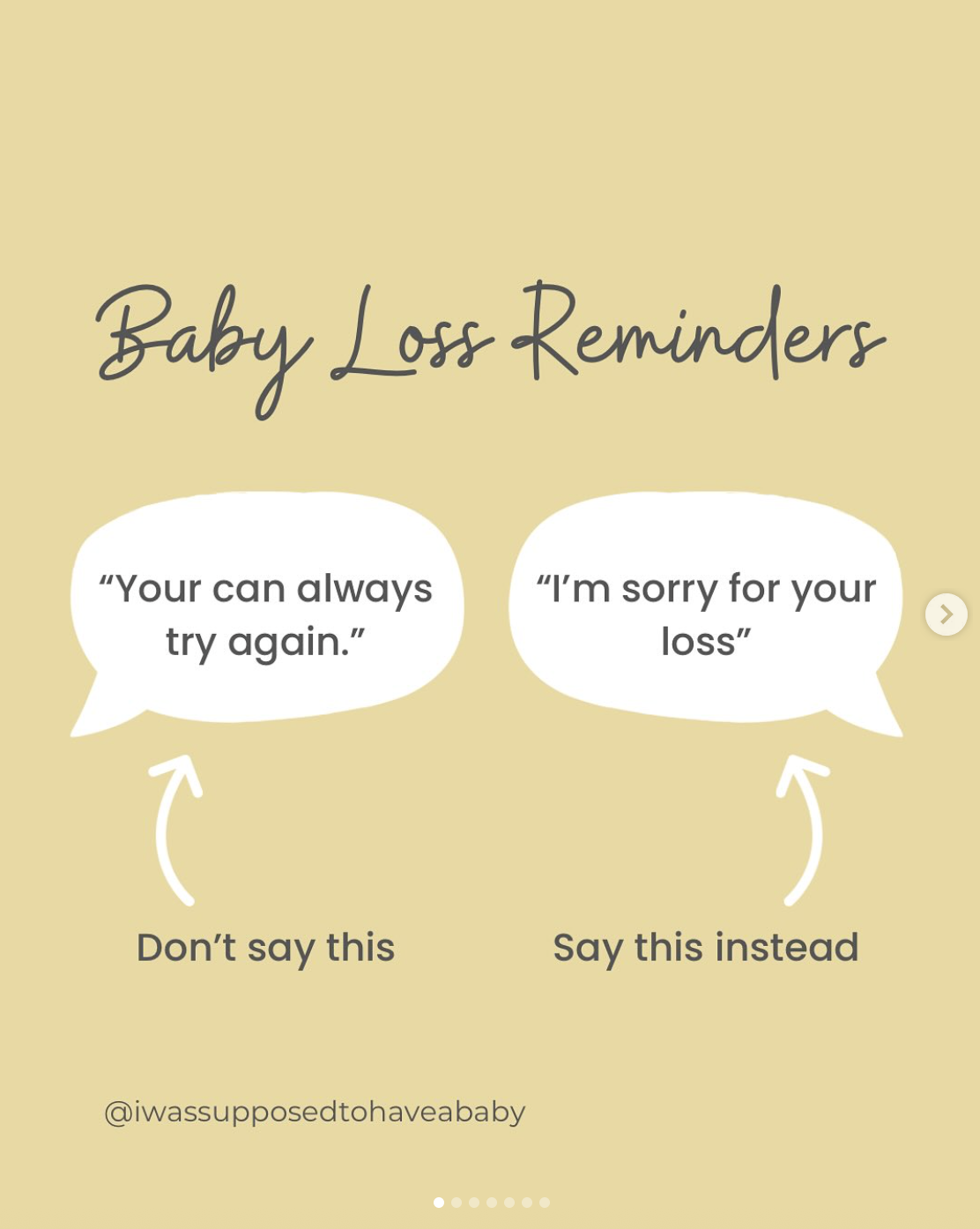
Baby Loss Reminders
A Brief Reminder on What To Say vs. What Not To Say To Someone After Pregnancy Loss ❤️
Remember, those struggling with grief after pregnancy loss are not looking for silver linings after loss, they just want to feel validated & supported. No matter how far along, how young they may be, how long they’ve been trying, how many losses they’ve had, how many children they have, or how easily pregnancy came to them, their loss matters and their grief is valid ❤️
Grief | grieving mom | infertility | miscarriage | pregnancy loss | stillbirth | infant loss
To Friends and Family
Thank you to the follower who sent us this letter ❤️🩹 it so eloquently captures our emotions right now.
Infertility | pregnancy and infant loss | miscarriage | stillbirth | ivf | fertility journey | fertility support
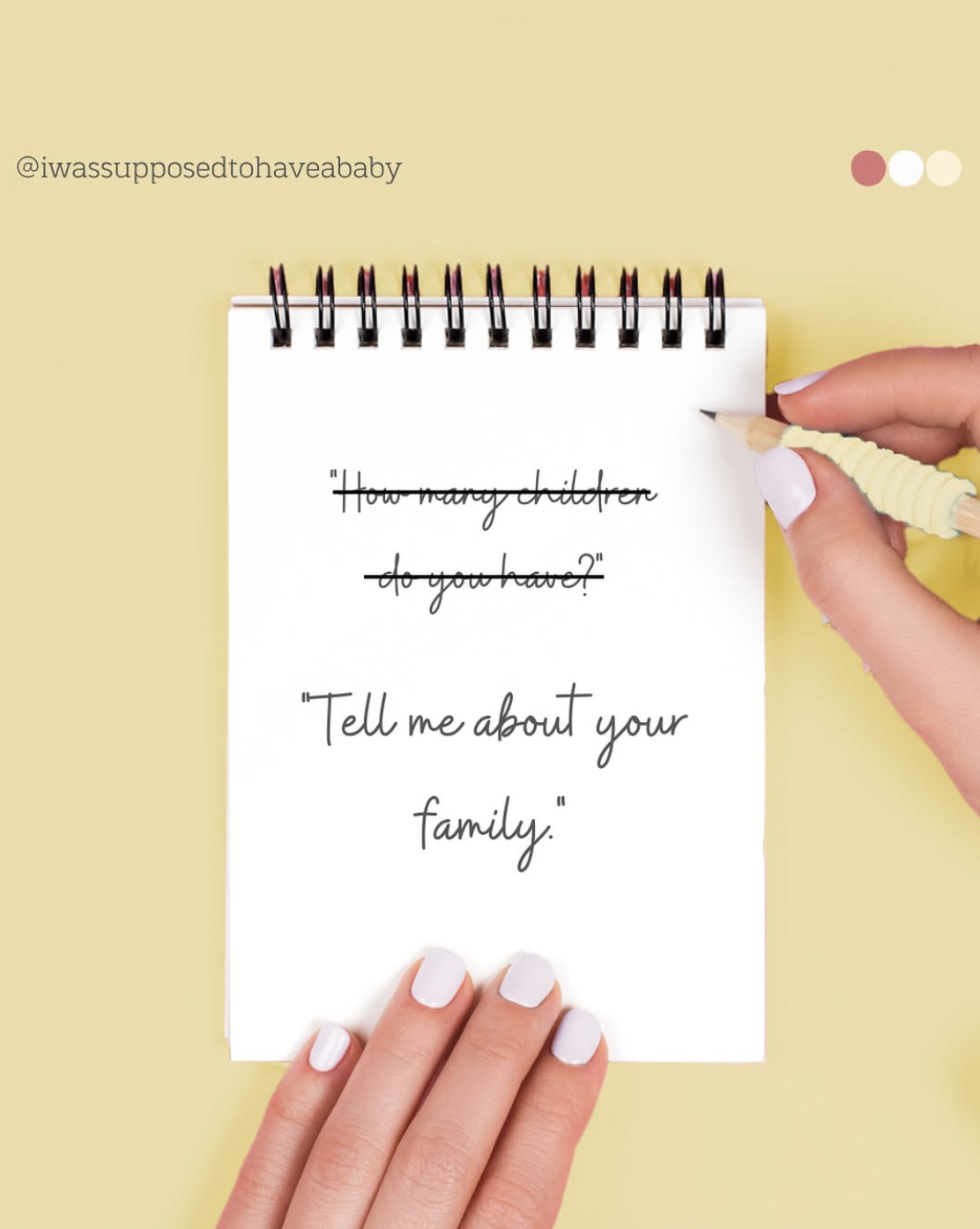
“Tell me about your family”
You might feel an instinct when meeting someone new to ask, “So, how many kids to you have?” or “Do you have kids?”
🚨DON’T🚨
Please, stop asking people about their kids, if they want kids, or how many kids they have.
For people in the fertility community, these questions are an incredibly hurtful, heartbreaking and triggering for struggling to build their family or grieving the loss of a pregnancy or baby. Such an “innocent” question is the source for so much pain.
So please, next time you want to ask someone about their family, try -
“Tell me about your family.”
❤️5 Ways To Ask, But Not Ask “Do You Have Kids?”❤️
❤️When you are meeting someone for the first time… “Ah, you just moved in! Welcome to the neighborhood. So, who lives in that big house with you?”

Mikvah Attendent
The mikvah can be a deeply emotional experience—especially for those navigating infertility, loss, or pain. Even well-meaning comments can unintentionally cause hurt.
This post is a gentle reminder: when in doubt, keep it simple.
Be supportive. Be respectful. Most importantly, be quiet when silence is more healing than words.

Stop Looking at People’s Bodies
Stop trying to figure out people’s fertility situation when looking at someone’s body.

It’s Not Your Business
Reminder - don’t comment on people’s bodies

How To Be A More Sensitive Host
How To Be A More Sensitive Host

Say This Instead
Don’t Say This, Say This Instead

National Adoption Awareness Month
November is National Adoption Awareness Month. As a fertility community, here are some things we need from the well-meaning people in our lives.

How To Announce A Pregnancy To Someone Going Through Infertility or Loss
We've complied a carousel of suggestions on how and when you should tell your person that you are pregnant.

Stop Telling People to Pray Harder
Stop telling people to pray harder.

Not Everything Happens For A Reason
Not everything happens for a reason. Some things happen, and they are horrible and awful. You could spend your life searching for a reason — you’ll never find it.

What To Say on People On Fertility Journey
What not to say and what to say to people on fertility journey. Examples of statements that do more harm than good, and alternatives to support those on ferility journeys.

Stop Saying Never Give Up
Sometimes you need to step back and take a break. A long break. Or change course. Or try something new. Or stop trying altogether. So I beg you, fertility community- let’s stop saying, “Never give up.”

“Everyone Has Kids Here”
Don't ask people how many kids they have. Why? Because of statistics. 1 out of 6 couples are dealing with some kind of infertility and 1 out of 4 pregnancies end in a loss.

Gossip
When you're struggling to have a child, gossip can be even more upsetting. Because if they're talking about everyone else's uterus, they're talking about yours too.

Don’t Say This!
Think before you speak. We could write a book about all the comments people have shared with us in the last week. And maybe one day, we will.

Tell Me About Your Family
You might feel an instinct when meeting someone new to ask, “So, how many kids to you have?” or “Do you have kids?” 🚨DON’T🚨Try instead: “Tell me about your family.”