Understanding how to respond
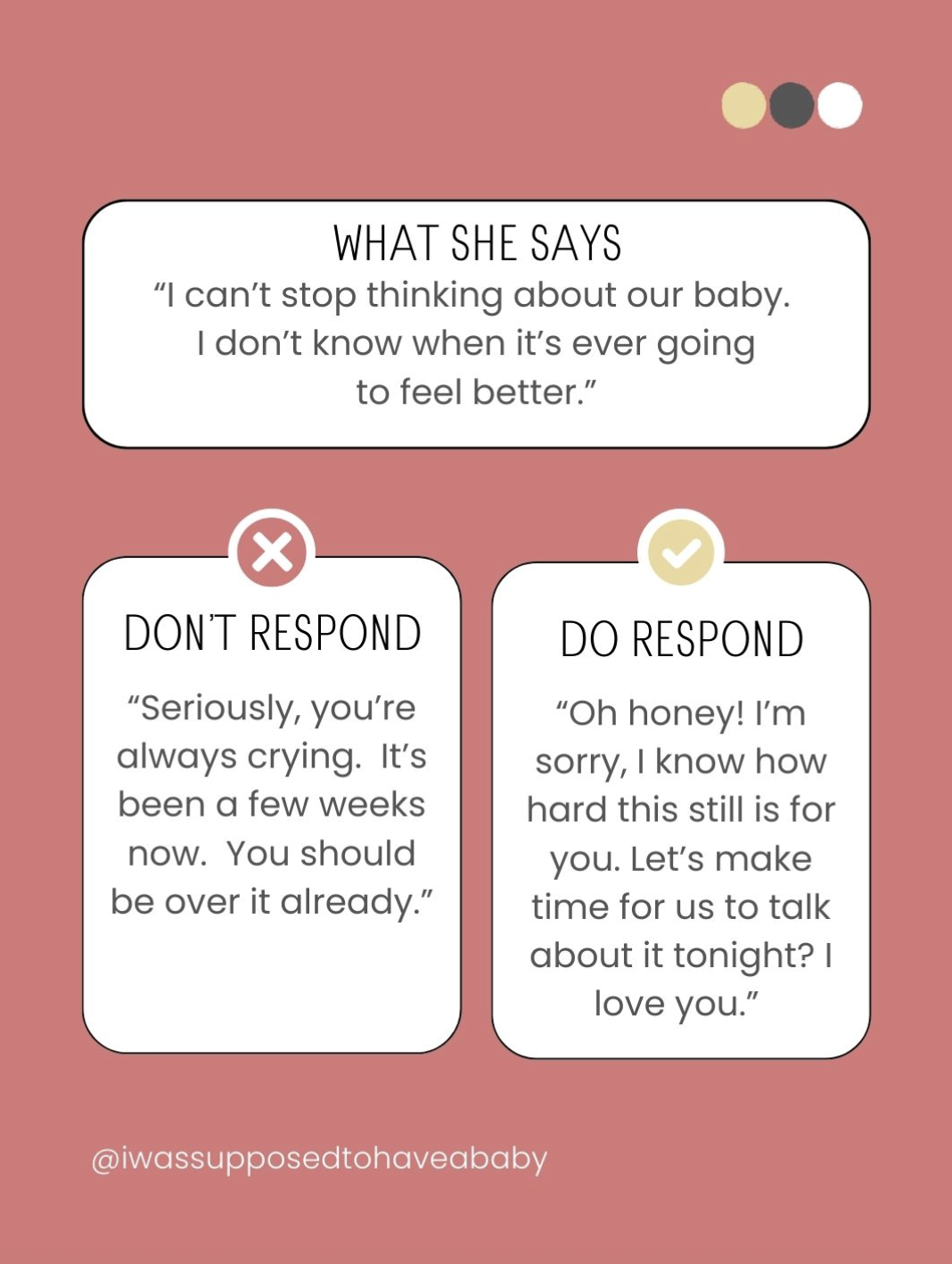
Just because there are two people in a relationship and they go through exactly the same thing, it doesn’t mean that they will feel the same way about it, or grieve as long.
Typically, women grieve longer and harder than men or their partners, who do not carry the pregnancy, because it’s an event that’s happening outside of their body. They feel sad, and they grieve, but they don’t experience the physical or hormonal changes of a pregnancy or a loss. They’re one step removed. This can lead to frustration and discontent from the side that seems to be “carrying” all of the pain, and from the other side, who is often ready to move through the pain.
The disconnect is compounded by society's insistence on a time limit for grief. There’s an unwritten rule that states the shorter the pregnancy, the shorter the amount of time that you’re “allowed” to grieve. And for some, this is true; they grieve a stillbirth for a longer period of time than a chemical pregnancy.
The problem is that this doesn’t account for so many other factors.
-Maybe that chemical pregnancy was after 5 years of IVF with the only good embryo.
-Maybe everyone else is also pregnant now, and that 6-week loss is always on her mind as she compares herself with her friends.
-Maybe she was the first in the family to get married and then pregnant, but having a stillbirth means that another sibling will get the honor of having the first grandchild.
There are so many things we don’t know.
What we do know is that grief should have no limitations and that each person needs to be treated with kindness and sensitivity after a loss.
Pregnancy & Infant Loss | Grief | Marriage | Relationships | Fertility Journey